A leading scientist in this field recently confessed to me:
Even we researchers at universities can no longer say how ChatGPT (full name, by the way: "Generative Pre-trained Transformer") works exactly to deliver these results in this linguistic quality. These are no longer public research projects, but private research initiatives, but they will have massive impact and influence on the public. Notable funders behind ChatGPT are people like Elon Musk and companies like Microsoft. It's important to know.
In any case, the Corona pandemic has decisively accelerated this development: On the one hand, because the digital system made it possible to monitor healthy/sick, tested/untested, vaccinated/unvaccinated people in the first place. On the other, because digital networking has been able to maintain the communication between people (at work and in everyday life) that is essential for survival - even if communication has shifted to the online space, to the digital universe.
OPERATING SYSTEM FOR OUR WORLD
We are in the middle of the digital transformation. Right before our eyes, we have watched the digital world change from the classic PC to the global operating system. The decisive factor was mass distribution via mobile devices; the smartphone opened up new possibilities for permanent networking. This has triggered another industrial revolution: Today, everything should or wants to be digitized. The global digital operating system networks work, leisure, private and even intimate matters.
The digital sphere now shapes actions at the technological, economic, military and even political levels. In connection with this, the digital plagues us with serious concerns: fear of monopolization, extremism, surveillance, loss of privacy, external control through automated decisions ... These issues are fundamentally not new. They reflect fears of our society. But due to the immense impact of the unregulated "digital echo chamber," these issues are obviously amplified many times over.
THE DIGITAL AND THE HUMAN
In addition to major challenges, however, IT & AI also bring with them valuable cultural achievements - new forms, channels and ways of perception and cognition for us humans. The digital is creating innovative ways of coming together and ultimately, presumably, a new kind of economy and politics. Bridges between the virtual and the real ultimately underscore the unique capacity of the human imagination.
Last but not least, the ever-evolving digital not only provides us with knowledge, but also promises us new sensory-aesthetic and even complex somatic experiences. With the help of the digital, analog people can be rethought and re-experienced - possibly even beyond their previous sensory capabilities. This is where the creative and artistic power of man can start anew.
CROSSROADS FOR OUR FUTURE
It is an eternal back and forth between all the new possibilities that AI & Co open up for us and the associated fears and concrete effects on the accompanying radical changes in the labor market. The back and forth is so strong and so divergent that it almost tears society apart. This was already expressed by Tim Berners-Lee (the original founder of the World Wide Web) in his well-received article "The system is failing" (The Guardian 2017).
In any case, we are at a crossroads for our future and the question is, which direction should we take? Are we explorers enough to explore the "next age" with all the ifs and buts? Or do we want and should we resist it? How much freedom can we give to all these developments? And to whom is this freedom actually given? A few super-rich people who can afford the necessary development steps?
How can we promote a situation in which people are actually placed at the forefront of these developments in the sense of humanity, and in which technological innovation is combined with social and cultural innovation?
DIGITAL HUMANISM?
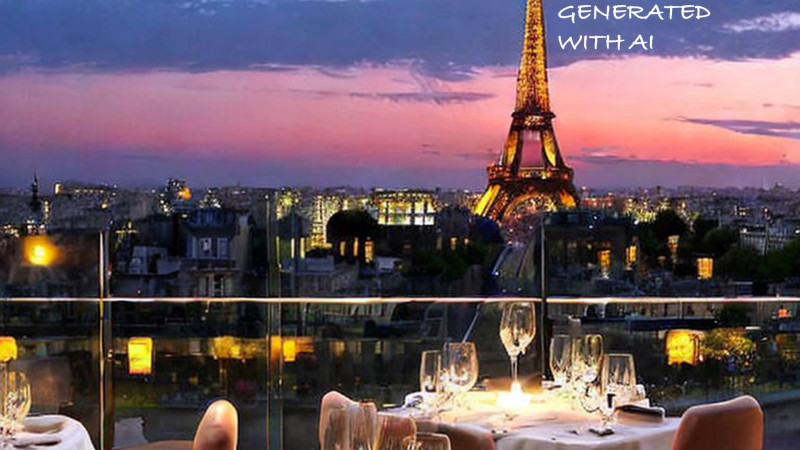
The call for "digital humanism" has been growing louder lately. The call for rules. This "Generative Pre-trained Transformer" called ChatGPT has received massive media attention in recent months - triggering a veritable AI hype that has now reached the mainstream of society. But other AI systems like "Stable Diffusion" also enable anyone to create high-quality images through simple text input that previously only trained artists, graphic artists or designers could have created. The low-threshold nature and global distribution via mobile systems such as smartphones makes the new generation AIs very effective. As a result, they are creating a new awareness in large sections of society.
HOW DO WE ARTISTS RESPOND?
[More in PART #2]
© SHA. 2023